Two Weeks Out: Program Order, Run Time and the Venue Walkthrough
Recital success is mapped out long before the first student takes the stage. Two weeks ahead, start by locking the program order. Teachers know which students will need to go early for nerves and which can anchor the program. Arrange the pieces by length, skill level, and instrument changes, keeping similar pieces apart for variety. For mixed ensembles or piano and strings, alternate instruments to smooth transitions.
Time the program honestly. Add up the actual lengths of student pieces, then add at least thirty seconds per performer for transitions and applause. Plan for a short intermission if the run time exceeds one hour. A printed program with clear running order helps everyone: students, families, and the person at the piano bench. Proofread all names and piece titles.
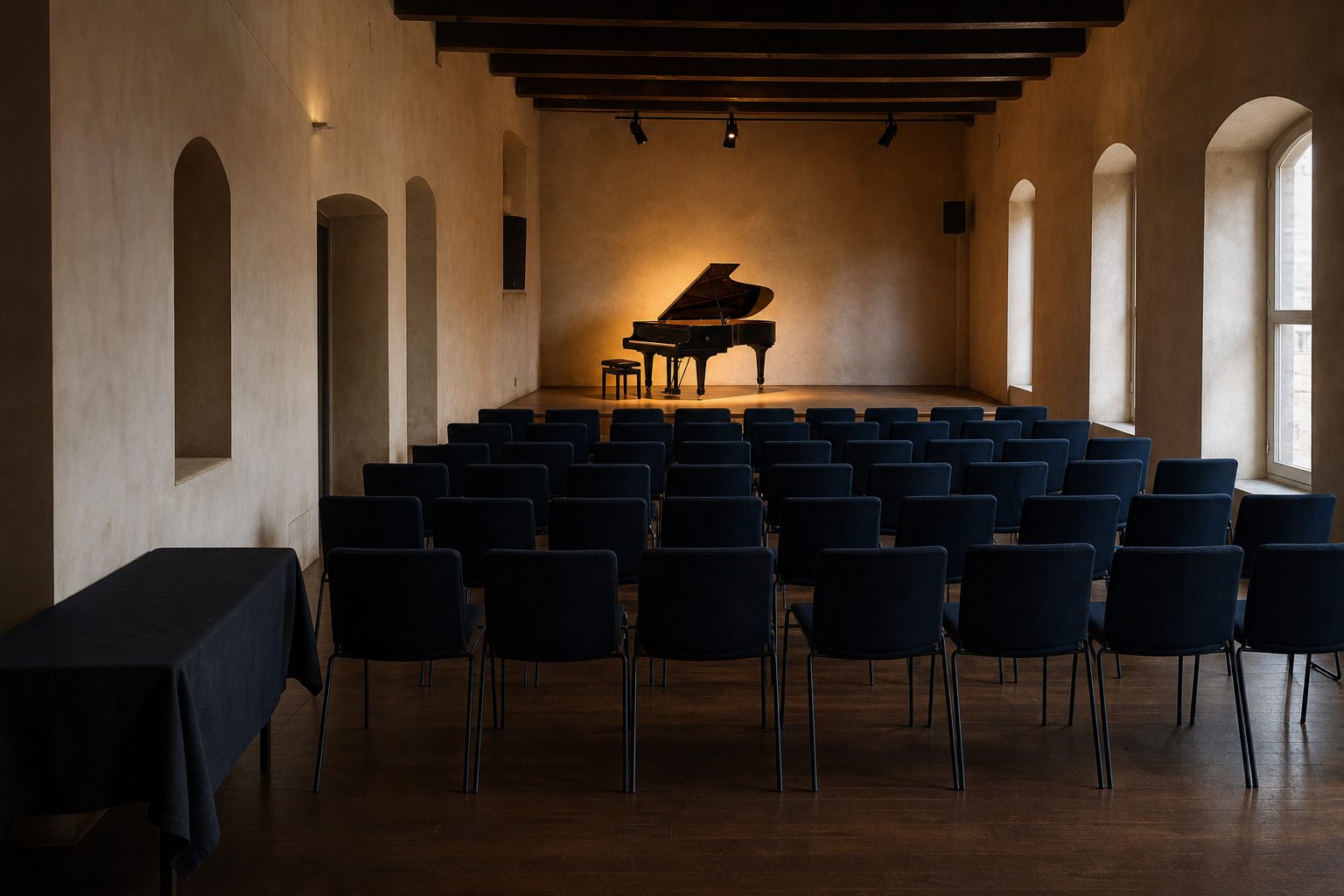
Visit the venue during a quiet time. Bring a tape measure and a notepad. Check stage access: Are there stairs students must climb? Where do they wait before performing? Find the nearest bathrooms and water fountains. Test light switches and see where electrical outlets are located. Confirm you can move the piano if needed, and note if there is a green room or just a hallway for warm-ups. Take photos of the stage layout for planning. Talk through the day-of timeline with the venue manager, including arrival, setup, and cleanup times.
Keep reading: How to Write a Weekly Practice Assignment Students Follow
Load In: Tuning, Bench Height, Chairs and Stands
The load-in starts well before guests arrive, often up to ninety minutes before show time. Begin with the biggest instrument: if there is a house piano, inspect it for working pedals and clean keys. Wipe off dust. If you are bringing your own keyboard, test all cables, pedals, and power sources. For string players, provide a tuning area that is out of the way of main traffic. Woodwind and brass players need a quiet spot to warm up reeds and oil valves.
Set the bench at standard height for the first performer, but be ready to adjust between students. Young pianists may need a footstool. Place music stands so each performer has a clear line of sight to the teacher or accompanist. Chairs should be sturdy and spaced to allow for instrument cases underfoot. Double-check that you have enough stands for duets or ensemble pieces.
Keep a tool kit on hand: screwdrivers, a few pencils, extra rosin, cleaning cloths, and a roll of gaffer tape for securing cords. Place extra tuners and clip-on lights nearby. Stack all cases neatly to one side, labeled with tape for easy pickup after the show. Label stands and chairs if sharing with another group later in the day.
The Warm Up Room and Keeping Instruments Playable
Students arrive with jitters. The warm-up room is their buffer. Choose a space away from the main hall where voices and scales won't carry. Set a rule for how long each student may practice, usually five to ten minutes per person. If space is tight, rotate small groups or use a hallway for quick run-throughs.
Have a supply of tissues, hand sanitizer, and water, but set a strict no-food rule to protect instruments and keep things tidy. Remind students to keep cases closed when not in use. For string players, monitor the room temperature. A cold room makes tuning difficult and can cause pegs to slip. Wind players should swab out instruments after warming up and before performing to avoid sticking pads.
Appoint a parent or older student to watch the warm-up space and call performers as their turn approaches. This reduces stress and keeps the show moving. Make sure each student knows the route from warm-up room to stage, especially young ones. Put signs up if the route is complicated.
Keep reading: Monthly Tuition, Per Lesson, or Semester Billing for Studios
Doors Open: Seating, Programs and the Front Table
Open the doors thirty minutes before the recital. Post a sign with the program start time and another with restroom directions. Greet families at the door. The front table should have printed programs, a sign-in sheet for attendance, and name tags for students and helpers. If you plan to take photos or videos, display a notice and ask for permission slips in advance.
Set up reserved seating for elderly guests or anyone with mobility issues. Mark a few rows for students so that transitions are quick and everyone can find their spot. If you have a large studio, split seating by instrument group or by performance order. Place extra chairs along the aisles for late arrivals, and leave clear pathways to exits for safety.
Assign one parent or staff member to watch for distracted siblings or wandering children. Keep the entryway clear of instrument cases and strollers. If you are collecting donations or selling tickets, place a lockbox with clear signage on the front table and assign a trusted volunteer to oversee it.
Run of Show: Announcements, Bows and Page Turners
Opening Remarks and Housekeeping
Begin on time. Step to the front with a brief welcome. Remind the audience to silence phones and hold applause until each piece ends. Announce the bathroom locations and exits. If photos are allowed, explain the rules now. Thank any parent helpers and the venue staff.
Introducing Performers and Managing Transitions
Call each student by name and piece title, pausing for them to settle at their instrument. For young children, walk them to the bench or stand and adjust height as needed. Allow a moment for tuning or setting music. If there is a page turner, introduce them so the audience knows who they are. Keep transitions brisk but not rushed. A gentle cue from the teacher can prompt quick starts.
After each performance, lead applause and prompt students to bow. For group numbers, line students up and bow together. If a student forgets to bow, give a quick hand gesture as a reminder. Keep water and tissues nearby for nervous hands or coughs. Use the intermission to reset chairs, tune instruments, and double-check the next group of performers.
Accompanists and Page Turners
Coordinate with accompanists well in advance. Make sure they have a copy of the program and know the order of pieces. If a student uses a page turner, rehearse the signal for page turns. Select a page turner who is calm, unobtrusive, and knows the music. For longer pieces, a page turner helps reduce stress for students and keeps the recital moving smoothly.
If there is a technical glitch, pause briefly and reset. Keep a calm tone so students and families stay relaxed. Remember, the audience is almost always supportive and forgiving, especially in a student setting.
See how PracticeSheet handles this for music education
When a Student Freezes: The Restart Protocol
Even seasoned students can freeze. The teacher's role is to make recovery routine, not a spectacle. If a student stops mid piece, do not rush to the stage. Instead, offer a calm verbal cue from your seat: "Take a deep breath and start from the last line." If the student is very young or overwhelmed, quietly approach, kneel to their level, and offer reassurance. Whisper the first note or opening phrase if needed. Never scold or show frustration.
If a restart is required, announce to the audience, "Let's give [student name] another try." This normalizes mistakes and models resilience. Applause, even mid performance, can help lighten the mood. For group performances, encourage students to support each other with eye contact and smiles.
Instruct students ahead of time on what to do if they lose their place: pause, breathe, and look for the teacher. Practicing this protocol in lessons reduces panic on recital day. Explain to parents and the audience at the start that mistakes and restarts are part of learning. Most guests will appreciate the transparency and cheer for the effort.
After a restart, lead the applause and thank the student for their courage. Privately, reassure them afterward and remind them that every performer has a tough day. This approach keeps confidence high and reduces the fear of future mistakes.
Strike, Lost and Found, and the Notes You Write That Night
Strike and Clean Up
After the last bow, strike begins immediately. Assign parent helpers to stack chairs, collect music stands, and sweep the warm-up room for forgotten cases or jackets. Wipe down the piano and return benches and stands to their original locations. If you brought your own equipment, follow a checklist as you pack: cables, pedals, sheet music, and extension cords go back in labeled bins. Secure all valuables before families start to exit.
Scan the venue for lost items. Set up a lost and found table near the exit, and take photos of anything left behind to email out later. Double-check bathrooms and side rooms before locking up. If the venue requires a walk through before departure, schedule it with the manager to avoid late fees or lost deposits.
Writing Notes for Next Time
Gather your notes as soon as possible after the event. Record what worked: the flow of the program, the speed of transitions, and which students handled nerves well. Jot down any hiccups: a broken string, a missing page, or a late arrival. Note the timing of the show versus the planned run time. This log becomes your checklist for the next recital.
Use your notes to plan future improvements. For example, if tuning took longer than expected, schedule earlier arrival for string players next time. If the warm-up room was too noisy, look for a different space or implement a rotation schedule. Share praise with helpers and send thank you notes to the venue staff, accompanists, and page turners.
Parents and students appreciate feedback, especially when it is specific. Write a short note to each student highlighting their progress and effort, not just performance. Recognize those who supported peers or showed extra preparation. These notes build relationships and encourage steady practice between recitals.
Having a reliable way to track assignments, share notes, and log practice helps teachers keep the details straight from rehearsal to recital. For many studios, digital tools that allow lesson notes and weekly assignments to be shared with parents make the post-recital follow-up faster and clearer for everyone involved.