Studio software, measure one

Write the week once, then see exactly who sat down to practice.

PracticeSheet turns the notes you scratch out in the last two minutes of a lesson into a clean weekly assignment the student carries home. The practice log comes back before the next lesson, and the parent reads the same page you do without setting up an account.

  • Running in 312 US teaching studios
  • 9,412 practice sessions logged last week
  • Studio set up between two lessons
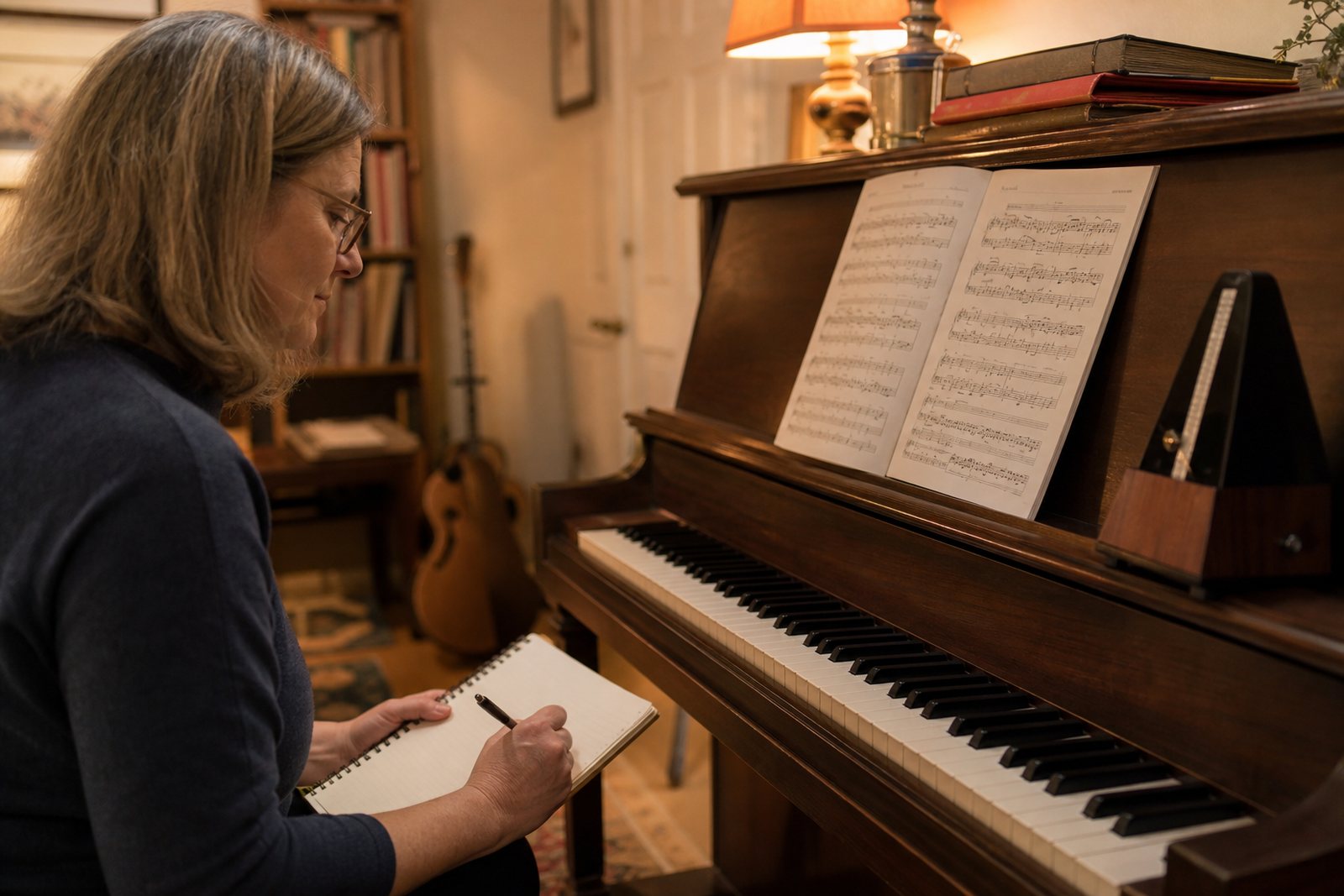
A private piano teacher writing lesson notes in a notebook beside an upright piano in a warm home studio
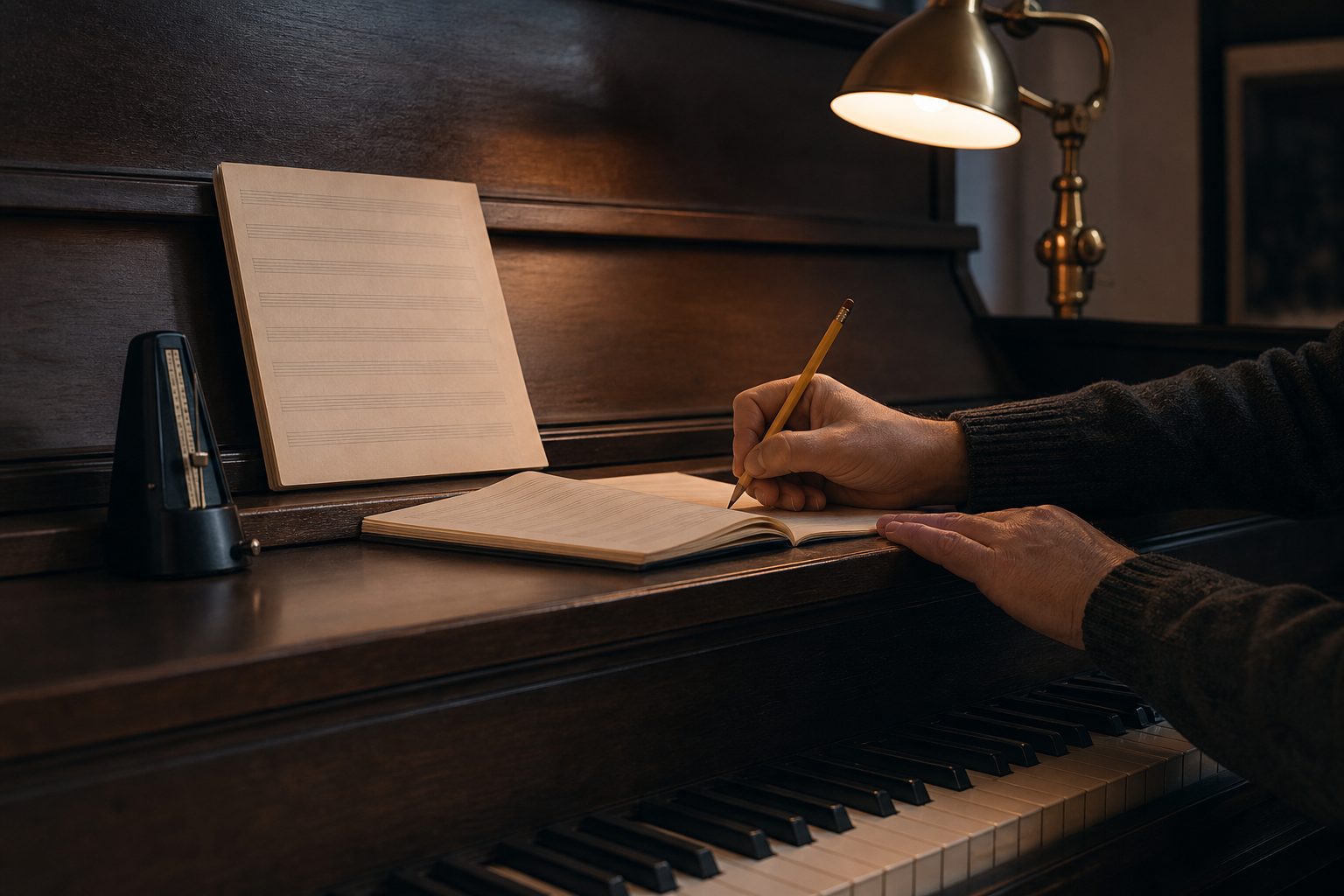
The last two minutes of a lesson, where the week gets decided

Measure two

The six days you never see

You control forty minutes a week. Everything that decides whether a student improves happens in the other six days, in a bedroom you will never stand in, and most studios have no record of any of it.

The reconstruction tax

Every lesson opens the same way: what did we assign, which page, what metronome marking, did she ever get the left hand under tempo. Eight minutes of recall, thirty-two times a week.

About $1,020 a month of billed lesson time spent remembering

The quiet withdrawal

Practice stops in November. Nobody says it out loud, the student coasts on sight reading, and the email arrives in March. By then the interest is gone and there is nothing written down to argue with.

One spring withdrawal at $55 a lesson costs $770 in remaining tuition

Parents in the pickup line

A family pays $220 a month and gets a shrug in the car. Without a written record, renewal season becomes a conversation about price rather than about progress.

Studios with no written home record renew near 71 percent, not 89

The notebook that stayed home

The assignment book lives in a backpack, in a car, at grandma's house. You rewrite the same week by text message on Thursday night for free.

Six rewritten assignments a month, close to 40 minutes of unpaid admin

Measure three

One week, from the bench to the bedroom

Four moves. None of them ask you to type during a lesson for longer than it takes a student to zip up a case.

  1. Write the note while they pack up

    Open the student, tap the pieces you worked on, and add two lines about what to fix. Last week's assignment is already on screen, so you are editing rather than starting over.

  2. Set the week: pieces, tempos, counts

    Each item carries a target metronome marking and a number of repetitions or minutes. Scales, etudes, repertoire and theory each get their own line so a student can see what a full session looks like.

  3. The student logs from the piano bench

    They open a link on a phone or tick the printed sheet on the music desk and enter it later. Each entry stores the date, the minutes and which items were touched, and a streak forms without anyone nagging.

  4. You start Tuesday already informed

    The studio board shows who practiced four days, who practiced once, and who has not opened the assignment since Saturday. Parents get the same summary on Sunday evening, so nobody is surprised.

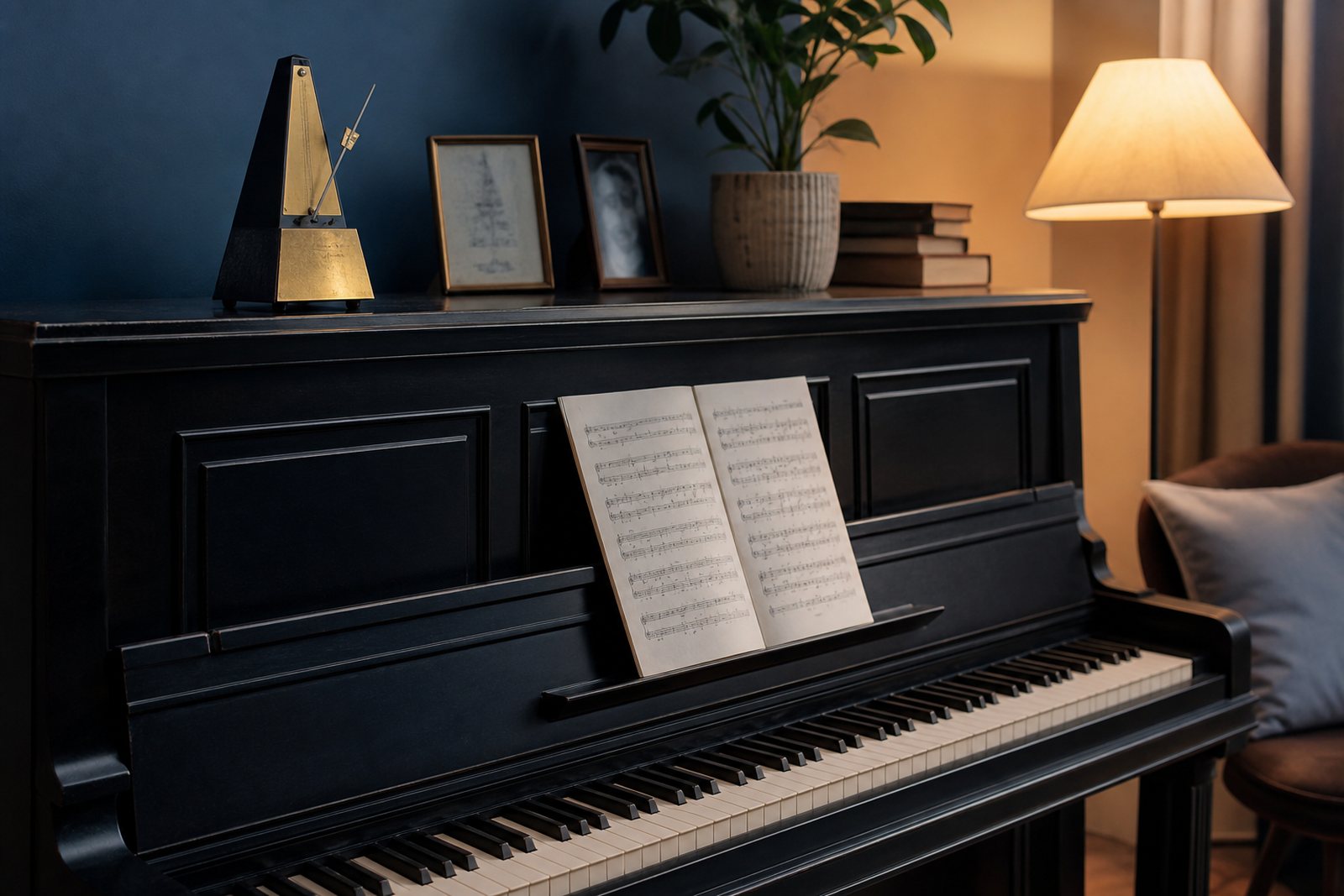
An upright piano with open sheet music and a brass metronome in a quiet home studio under evening lamp light
Every assignment carries a tempo, so practice has a target

Measure four

Built for the way a studio week actually runs

Nothing here was designed for a sales team and then renamed for music. Every screen came out of a teaching studio in Sacramento, a strings program in Grand Rapids and a twelve teacher academy in Raleigh.

Lesson notes that carry forward

Open a student and last week is already there, with the pieces, the tempos and the thing you said you would check. You edit two lines instead of writing a page from memory.

Every note stays on the student's timeline, so a September fingering problem is still readable in April.

Assignments with a tempo, not a vibe

Each line on the week carries a metronome marking, a repetition count or a minute target, so "practice the Clementi" becomes "measures 9 to 24, quarter equals 76, five clean runs".

Students stop guessing what finished looks like, and you stop hearing the same passage at the same broken tempo.

Practice logging in ten seconds

The student taps the day, the minutes and which items they touched, from a phone at the piano or from the printed sheet on the music desk afterwards.

Streaks and weekly totals build on their own, which turns out to motivate a nine year old far better than a sticker chart.

A parent view with no account to create

Parents get one link that always shows the current week, the practice days and your last note. No password, no app store, no support email from a grandparent on Sunday night.

You choose what is visible, so private studio notes stay between you and the student.

Repertoire history and recital planning

Every piece a student has finished stays in a searchable list with the date it was polished and the level it sat at. Building a spring recital program takes minutes rather than an evening of scrolling old notebooks.

Festival and audition requirements can be tracked against the same list.

Roster, makeups and studio notes

Keep the active roster, lesson day, instrument, level and billing note in one place, and mark a makeup without hunting through a text thread.

When a student pauses for marching band season, the record waits for them instead of disappearing.
Measure five

What changes by the second month

Numbers below come from 312 US studios using PracticeSheet during the 2025 to 2026 teaching year, compared with the eight weeks before they started.

31%

More logged practice minutes

A written target and a visible streak change behavior faster than a reminder does. The lift shows up strongest with students aged 8 to 13.

6.4h

Hours returned each month

Eight minutes of recall per lesson disappears, and Thursday night assignment texts stop. That is most of a teaching afternoon back.

94%

Parents opening the Sunday summary

One link, no login, sent the evening before the week starts. Parents read it because it takes eleven seconds and tells them something they did not know.

2.3

Fewer withdrawals per studio per year

Slipping practice is visible in week two rather than in March, which gives you time to change the repertoire before a family gives up.

Measure six

Teachers who stopped guessing

Three studios, three instruments, three very different rosters. All of them had the same blind spot before they started.

I teach 41 students and I used to keep the entire studio in a spiral notebook and my own memory. In the first week I could see that four of my intermediate kids had not opened the assignment since their lesson, so I called those parents on Wednesday instead of finding out at the spring recital. Two of the four are now the steadiest practicers on my roster.

Marguerite Alvarado Owner and piano faculty, Sixteenth Street Piano Studio, Sacramento, California

String parents want to help and most of them have no idea what a good practice session looks like. Now the sheet says open strings for tone, then the Wohlfahrt at quarter equals 68, then the two lines of the concerto, and a parent can read that out loud. My January cancellation rate was the lowest I have seen in nine years of running the studio.

Devin Rooks Violin teacher and studio director, Rooks Strings, Grand Rapids, Michigan

Twelve teachers, three buildings, and we were running on two different systems and a shared spreadsheet nobody trusted. Moving the whole academy over took one Saturday morning and a pot of coffee. The part that sold me was the parent page: our front desk stopped taking the nine or ten weekly calls asking what a student was supposed to be practicing.

Priya Ramanathan Director, Cardinal Music Academy, Raleigh, North Carolina
38
US states with an active PracticeSheet studio
11,600
Students carrying a written week right now
4.9 / 5
Average studio rating across our three published reviews

Measure seven

Priced like a music stand, not like enterprise software

One monthly figure per studio. No charge per student, no charge per parent, and no percentage skimmed off your tuition.

Studio Solo

One teacher, a home studio, a roster you know by heart.

$15 per month, USD

  • Up to 25 active students
  • Lesson notes and weekly assignments
  • Practice logging from any phone or tablet
  • Parent link with the Sunday summary
  • Printable practice sheets for the music desk
  • Email support answered within one business day
Request a walkthrough

Music School

A faculty, a front desk and more than one building.

$99 per month, USD

  • Everything in Studio Plus
  • Up to 400 active students
  • Unlimited teacher logins with roles and permissions
  • Front desk view across the whole faculty
  • Shared repertoire library and studio policies
  • Faculty onboarding session and CSV export whenever you ask
Request a quote

Every plan is billed monthly in US dollars. There is no setup fee, no annual contract and no per student charge, and you can cancel at any time from your studio settings with billing stopping at the end of that month.

Measure eight

Questions teachers ask before the first lesson

Straight answers, written by the person who has to stand behind them.

From the magazine

Studio Hours, the studio trade reporting behind this product

Reporting on the craft, economics and rules of running a private music studio in the United States, from tuition policy to recital day.

Read every article in Studio Hours

Measure nine

Show us one week of your studio

Tell us how many students you teach and how you record assignments today, and we will walk your own roster through PracticeSheet on a screen share. Twenty-five minutes, no slide deck, and you keep whatever we build during the call.

  • We answer every message ourselves within one business day, usually the same evening.
  • Bring a real student and a real week. Demos on invented data help nobody.
  • If your studio is better served by paper, we will say so plainly.

One reply, written by a person, normally within one business day. Prefer plain email? Write to jimenezjulien42@gmail.com and it lands in the same inbox.